
It doesn’t matter if you win or not. You can still be a “traitor” — not the “hero.” Not within the eyes of the American public when you compete for another country’s national team for the Olympics.
That’s the kind of treatment Eileen Gu, 22, a freestyle skier, has been receiving. American-born and the daughter of a Chinese immigrant, she chose in 2019 to compete for the People’s Republic of China. Ever since her decision to represent China instead of the U.S. at the competitive level, she has been demonized by the American media, public, and even by Vice President JD Vance, branded as a “traitor.”
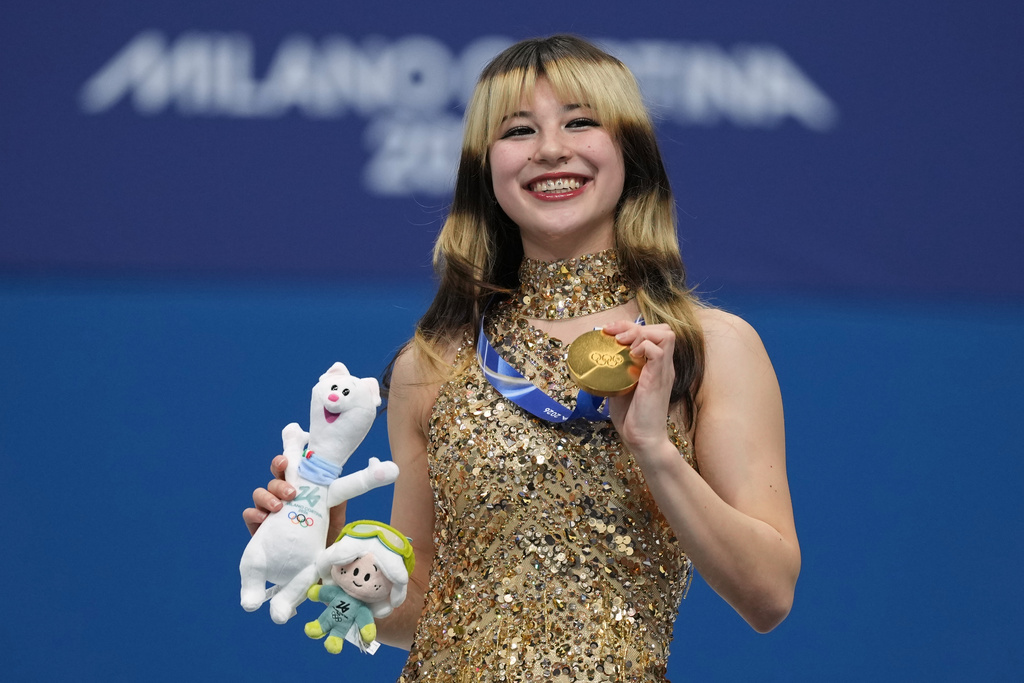
The narrative couldn’t be any more different from that of twenty-year-old figure skater Alyssa Liu. Lauded for her great comeback after retirement and her subversion of the “elegant” persona expected of figure skaters with her bold personal style, Liu has become somewhat of an American “hero” in the eyes of the country.
Jarringly enough, their backgrounds are quite similar. Both hail from the Bay Area in California. Both of them are children of Chinese immigrants. The only marginal difference: they represent different countries. That’s the delineation the American media loves to exploit.
As Alyssa Liu puts it in an interview with the New York Times, “ I think people are hypocritical for shaming her for representing China. So in my head, it’s a bit hypocritical, because her mom is an immigrant… And it’s a sport. It doesn’t matter what country we represent. Sport is sport, and she has a love for competition, she has love for the game. I think that’s all that matters. There’s no shame in going to where opportunity is.”
All I can think about the discourse is how arbitrary it all is — how the discussion has been blown way out of proportion to how important it is to represent a country. Yes, one may have origins in another country, but nationality is a tangible label. Yes, athletes with foreign ties compete for other countries or teams. This. Isn’t. New. People immigrating, moving, and identifying as different nationalities isn’t a new concept. Gu representing China isn’t as big of a deal as the outlets say it is — she simply chased opportunity where she found it and decided to embrace her Chinese lineage.
And all I can think is how hypocritical the discourse is. Team U.S.A. reaps the benefits of having foreign-born and immigrant athletes on its team. According to George Mason University, “approximately 3.0% of athletes competing on Team USA [2026] are foreign-born and another 13.5% are children of immigrant parents(s). Combined, nearly 17% of Team USA has direct immigrant ties.” Out of the foreign-born athletes, they come from Australia, Canada, Italy, Ukraine, and New Zealand. Many are dual citizens. Just like Gu. Even three players for the U.S. Men’s Ice Hockey team — Brady Tkachuk, Matthew Tkachuk, and Jake Sanderson — are Canadian and received praise from President Donald Trump, receiving an invite to the White House for the State of the Union Address.
If America profits out of the success of “outsourced” resources — athletes from other countries representing them — then who is America to judge for citizens deciding to compete for different countries? If Gu is to be shamed, then shouldn’t those who “betrayed” their countries to represent the U.S. in the Olympics be too, according to the same logic?
Perhaps Gu is a “special” case. Perhaps Americans are envious that her title as the most decorated freestyle skater and the most decorated female freestyle skier in Olympic history is not attributable to their country — that the medals she wins cannot be claimed as wins for America. Perhaps it’s because she is a descendant of a Chinese immigrant. But hypocritically enough, because she is a child of an immigrant, she would be told to go back to China. And even though she basically has, turning to China as her representative base, people in the U.S. are upset: upset that their racist rhetoric was taken literally, upset enough to belittle her achievements in a press conference, naming her win of two silver medals “as two silvers gained or two golds lost,” upset enough to drag her name through the mud online. While we can perhaps attribute some of the hostility to the rocky geopolitical relationship between the two countries and the normalized, unfavorable rhetoric towards China, all of the bitter treatment is unjustified. She has the agency to compete in the sport she loves for whichever country she wants. And so do other athletes.
National representation is by choice. Who one represents in the international competition space is a choice. To represent Team U.S.A isn’t decided on origin, it’s by merit and by agency. To compete as an American isn’t defined by being natively born — it’s by opportunity and pride.
The Zeitgeist aims to publish ideas worth discussing. The views presented are solely those of the writer and do not necessarily reflect the views of the editorial board.