
“Within three to five years, we can assume Iran will be autonomous in its ability to develop and produce a nuclear bomb.”
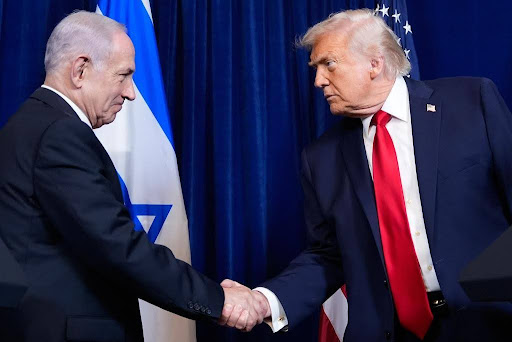
This statement was addressed to the Knesset, the Israeli parliament, in 1992 by former Knesset member and current Israeli Prime Minister Benjamin Netanyahu. Since then, Netanyahu has publicly reiterated the “imminent” Iranian nuclear threat prediction in 1996, 2002, 2009, 2015, 2019, and in 2025 gave a speech preluding the Twelve Day War with Iran. Most recently, in March 2026, Netanyahu justified joint U.S.-Israeli attacks on Iran stating that “Iran’s bomb program would have been immune within months.”
To give Netanyahu the benefit of the doubt, his repeated warnings that have not come to fruition for the past three decades have invariably led to two conclusions. Firstly, it would mean that Mossad and the CIA, two of the most powerful intelligence agencies in the world, along with the IAEA (International Atomic Energy Agency), the international nuclear watchdog, are always at least somewhat uncertain whether Iran could produce nuclear capabilities in a short span of time, and thus would always err heavily on the side of caution. Secondly, it would mean that Israel’s prior efforts to cripple Iran’s nuclear program via conflict or diplomacy have clearly not succeeded, and more drastic and “novel” measures need to be taken.
There is no point in trying to convince top Israeli and US authorities that Iran will not develop nuclear weapons. When a threat is identified, or perhaps more appropriately “sought out,” measures of increasing intensity are carried out to prevent said threat. Such measures prove unsatisfactory to top Israeli and US authorities in permanently crippling Iran’s nuclear capabilities by whatever criteria, and the vicious cycle starts again.
Instead of trying fruitlessly to convince those who fervently believe Iran is a nuclear threat that it is not, we should examine the consequences if Iran did develop a nuclear weapon. Would an Iranian nuclear weapon truly create the kind of existential threat many have claimed? President Trump once warned that “if they [Iran] do have a nuclear weapon, Israel is gone — it’ll be gone,” and described nuclear weapons as “the greatest single threat to our country, but to the entire world.” This type of alarmist rhetoric is not rooted in reality. Even the “worst-case scenario” is unlikely to affect the U.S. or even destabilize the Middle East.
An argument shared across very different leaders, such as Trump and Obama, warns that if Iran obtains nuclear weapons, it could trigger a nuclear arms race, where other states in the region, such as Saudi Arabia, Turkey, and Egypt, would be incentivized promptly to obtain their own nuclear weapons. Yet, would this be a catastrophic outcome? Do these countries, which are all key U.S. allies, have any tensions so great and unresolvable between them to warrant the consideration of nuclear weapons? More importantly, are these neighboring states somehow willing to overlook the MAD (mutually assured destruction) principle, in that they are nearly certain to face nuclear annihilation in retaliation in the event that any one of them attacks first?
Ironically, the very real and ongoing war to “prevent” this improbable and hypothetical nuclear war is what is actually destabilizing the region and is a conflict the U.S. should not be a part of. For example, when the Strait of Hormuz was closed, 20 percent of the world’s oil traffic was severely threatened. There has already been significant collateral damage, and civilian casualties are building, including a missile strike that killed 160 children in an Iranian school.
Unfortunately, this is likely scratching the surface of what’s yet to come. As aforementioned, the conflict is not simply over when the missiles stop firing, such as at the end of the Twelve-Day War, but only when Israel is satisfied that Iran could never develop nuclear weapons. This would entail occupation of Iran or regime change at the very least, which is extremely unlikely given the recent mass protests and the death of the Ayatollah, unless the U.S. is dragged into a long and costly ground war, a reality recently emphasized by the U.K.
Alternatively, it is possible that Netanyahu has been lying or greatly overexaggerating the Iranian nuclear threat for the past 30 years to justify wars for Israel to increasingly consolidate regional dominance disguised as wars of prevention. But it shouldn’t matter either way. The vast majority of Americans don’t support this war. Even fewer support a ground invasion. For an administration whose motto is America First, enabling Israel’s war does nothing if not damage the interests of the American people.
Congressional Democrats’ push to constrain President Trump’s war powers under the War Powers Resolution is a start, but not enough. Nor is simply electing more Democrats likely to change the status quo on Israel. Americans who do not want to be fecklessly drawn into wars started by Israel should address the root of the issue: the overinfluence of pro-Israel PACs (political action committees) on U.S. politicians, most notably AIPAC (American Israel Public Affairs Committee). Until U.S. policymakers face meaningful domestic pressure to place American interests above those of foreign governments and their well-funded lobbying networks, the cycle will continue: another “warning,” another “crisis,” and another war that increasingly “requires” U.S. involvement.
The real choice standing before Americans is not whether Iran will one day obtain a nuclear weapon. It is whether we are willing to keep accepting a cycle of escalation that will ultimately draw the United States into an asinine boots-on-the-ground war — or demand that our government step outside it.
The Zeitgeist aims to publish ideas worth discussing. The views presented are solely those of the writer and do not necessarily reflect the views of the editorial board.