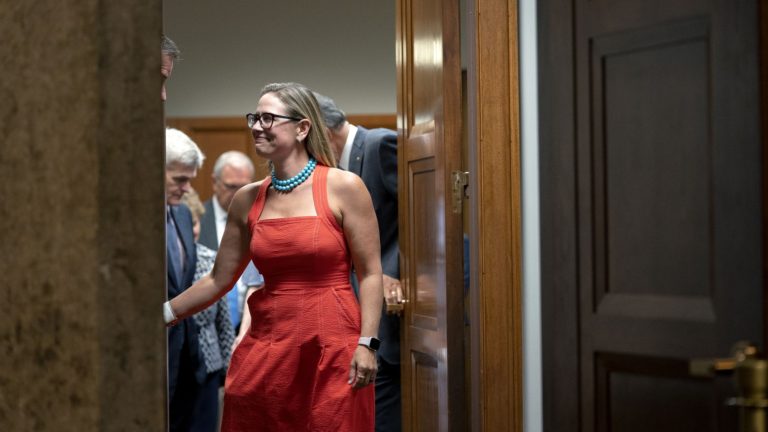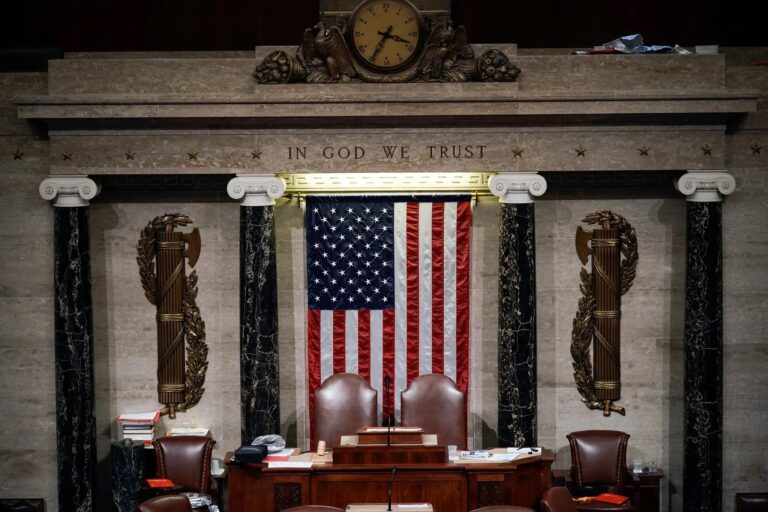
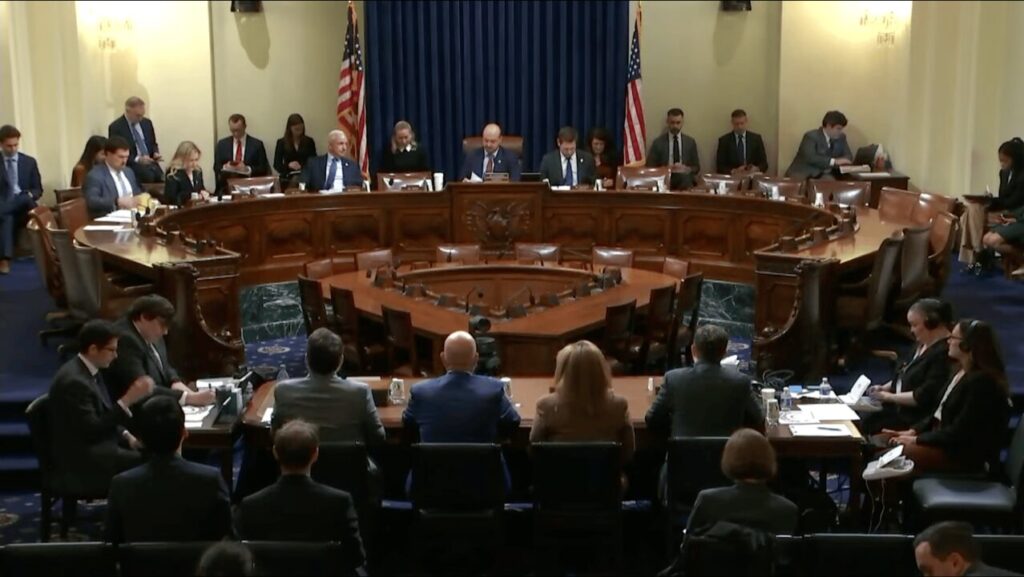
From the Attorney General Pam Bondi to former Secretary of Homeland Security Kristi Noem, it seems that our “for you” pages have been flooded with clips of high-profile political figures being interrogated in front of members of Congress in recent months. Congressional hearings aren’t a new phenomenon, so why does it feel like we’re hearing more about them all of a sudden?
According to the GovInfo, Congressional hearings serve to “obtain information and opinions on proposed legislation, conduct an investigation, or evaluate/oversee the activities of a government department or the implementation of a Federal law.” Most hearings are open to the public and broadcast on C-SPAN.
Perhaps counterintuitive to this sentiment, a recent study found that over 45 years, the number of witnesses called to testify before Congress has decreased by nearly 80 percent from 32,898 witnesses in the 95th Congress to just 6,632 witnesses called before the 114th Congress. The actual number of hearings called has decreased drastically over the past 10 years, but with the introduction of short-form media and increased partisanship, clips of interviews and testimonies are more widely circulated than ever before.
The congressional hearing is one of the most powerful tools available to Congress, and has the potential to shape not only legislation, but public opinion across the American electorate. Experts called to testify before Congress can address the American public at large to raise the profile of issues that may not receive attention. Congresspeople themselves can call witnesses to address the concerns of their constituents, and use hearings to complete one of their most vital functions as the legislative branch: executive oversight.
In the post-Trump era however, hearing selection is left to the hands of party leaders rather than individual committees. A study found that in recent years, committees tend to shift their focus from executive oversight hearings when their party holds the White House. When priorities shift along party lines, the effectiveness of these committee hearings is lost.
The recent interview-turned-shouting-match with former Secretary of State Hillary Clinton regarding her husband’s alleged affiliation with convicted sex trafficker Jeffrey Epstein serves as an example of the ways in which the House Oversight Committee uses hearings and depositions to interrogate political opponents with the mandate of federal authority. During a hearing that lasted a little over four and a half hours, Secretary Clinton testified that she had no knowledge of the topic she was called to testify about, and that her husband — who testified the next day — would be able to answer any questions better than she could. Partway through the interview, Secretary Clinton walked out after she had been made aware that Colorado Representative Lauren Boebert had leaked a photo of the closed-door hearing after the committee Republicans had denied the Clintons’ request to make the hearings public.
Despite the potential for these hearings to serve as genuine means to shape legislation and for experts to address the nation, the real purpose of congressional hearings has been reduced to the metaphorical whipping stick of Congressional politics. They are no longer a congressional tool, but rather a partisan one.
The hearings that get the most attention now are those that produce the catchiest 30-second sound bite, perfect for the increasingly popular short-form media that deliver the easiest, quickest possible information about testimony. Because of the rise of short-form media like this as well as increased partisanship in the federal government, hearings have devolved into a mudslinging pit, where the only outcome is that everyone gets dirty.
Organizations like the Bipartisan Policy Center have identified specific issues with the current process like the lack of scheduling oversight, lack of committee participation, and the dismissal of rules of decorum during the hearings and have proposed methods of modernizing and streamlining hearings. Unfortunately, no amount of oversight will change the fact that the root issue is that the hearings themselves have become a tool for political spanking rather than oversight and fact-finding.
The true danger of this might not even be the sheer inefficiency this causes in Congress, but that these hearings only serve to highlight partisan divides within Congress. When the only clips of hearings that reach voters are of aggressive Congresspeople and argumentative witnesses, it furthers the idea that Congress is so deeply divided along party lines that it can’t function.
Congress runs the risk of devaluing their most powerful tool just to score political points against partisan opponents. By continuing to abuse this power, Congress is neglecting the potential of these hearings to serve as genuine means to inform legislation and inform the public.
The Zeitgeist aims to publish ideas worth discussing. The views presented are solely those of the writer and do not necessarily reflect the views of the editorial board.