Former Prime Minister Imran Khan of Pakistan has spent more than two years locked away in solitary confinement. Since his arrest in August 2023 for charges that his supporters describe as politically motivated, ranging from corruption to criticism regarding his marriage, the national leader has been subject to serious mistreatment of every kind.
Born and raised in Pakistan, the Oxford alumnus earned his Philosophy, Politics, and Economics degree in 1975 before pursuing a cricket career. He served as Captain of the Pakistan Cricket Team from 1982 to 1992, leading the team to its 1992 World Cup victory. Following his sports retirement, Khan turned down an acting career to instead pursue more philanthropic endeavours. In honor of his late mother, he fundraised for and founded the nation’s first cancer research hospital, the Shaukat Khanum Memorial Cancer and Research Centre.
As Pakistan’s political situation deteriorated, the cricket superstar pivoted. He sought to enact vital change through political means. Not wanting to contribute to the various corrupt pre-existing political parties in Pakistan, Khan opted to found his own: the Pakistan Tehreek-e-Insaf . Over the next few years, he ran for and finally won a seat in the National Assembly in 2002. From there, his political career truly began.
In the 2013 Pakistani general election, Khan ran against Nawaz Sharif, making an enemy of the corrupt politician who had previously offered Khan a place in his own party, the Pakistan Muslim League (N). Khan had declined and was now running against him in an election he ultimately lost.
Still, Khan persevered and was democratically elected as Prime Minister in the July 2018 general election. He then served the nation through COVID-19, implementing measures to minimize the pandemic’s spread as well as standing his ground in matters of foreign policy against influential leaders like Trump, unlike his predecessors.
Unfortunately, as crucial as Khan was to a developing Pakistan, no one expected, nor wanted, to see such strong leadership from this South Asian country in the international space. Imran Khan proved to be a formidable adversary for many Western sovereigns because of his ideas for an independent Pakistan. He no longer wanted his nation to serve as a slave to the West and sought an alternative alignment with Eastern powers.
This, among other differences, made Khan widely unpopular with Pakistan’s military establishment. The burning resentment of all of Khan’s opponents finally came to a head in April 2022 when his rival Nawaz Sharif formed an opposition coalition government backed by military support and led a no-confidence vote that ultimately ousted him.
Since Imran Khan’s arrest in August 2023, he has been held in solitary confinement at Adiala Jail in Rawalpindi, just outside the nation’s capital, Islamabad. In the few instances he has been allowed visitors, his family has reported that his living conditions have been poor and that the isolated leader has described his detainment as “mental torture.”
Over the course of the past few months, the former P.M.’s health has deteriorated greatly, including his vision. Since October 2025, Khan has been asking jail authorities for medical treatment for the failing vision in his right eye. These requests went ignored, and now, according to a recent report from a Supreme Court-sanctioned lawyer, Khan suffers from 85% blindness in one eye.
This institutionalized medical neglect is inhumane. Coupled with the extreme isolation Khan faces, his circumstances are far too cruel a punishment for his benevolent endeavors to rid his country of the corrupt regimes that have now imprisoned him.
Imran Khan has lost so much in order to serve his country. His first marriage with Jemima Goldsmith fell through because of Khan’s dedication to something greater than himself: his commitment to improving the lives of his countrymen. In the past few years, he’s continued to lose even more. First, his elected position as Prime Minister of Pakistan, then the ability to campaign in future elections due to illegitimate charges. He’s also lost his freedom, being detained as a political prisoner, and now his eyesight as well.
Thankfully, other cricket captains like Greg Chappell and Sunil Gavaskar stand in solidarity with Imran Khan. Upon hearing of Khan’s most recent maltreatment, they wrote a letter to P.M. Shehbaz Sharif with the demand: “Treat him with dignity.”
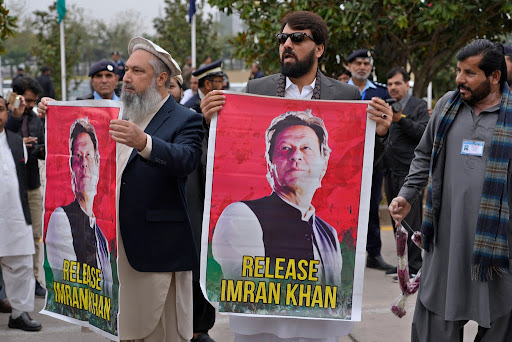
Heartbreakingly, their requests have fallen on deaf ears. While the people of Pakistan regularly protest in the face of such injustice, how can the rest of the world choose silence? Why are human rights organizations not broadcasting this vile violation for all to see? How are we all collectively allowing this great leader to be shoved in a dark cell and forgotten like this?
Regardless of how Western leaders view Khan’s politics, they should recognize and seek to rectify the injustice of a democratically elected leader’s baseless imprisonment. Regardless of whether his domestic opposition views him as guilty or not guilty of his charges, Khan deserves to be treated with basic human decency while imprisoned. Imran Khan must immediately be granted urgent medical care before his health deteriorates further.
The Zeitgeist aims to publish ideas worth discussing. The views presented are solely those of the writer and do not necessarily reflect the views of the editorial board.