Donald Trump’s new Alaska drilling pursuit is being sold to Washington like any other irksome Black Friday doorbuster you’ve seen plenty of in recent weeks, screaming slogans like “limited time,” “huge savings,” and “act now or the economy suffers.” Besides the obvious environmental harm that comes from oil drilling, the economic damage that would be derived from oil extraction would be just as detrimental to the economy as to our planet.
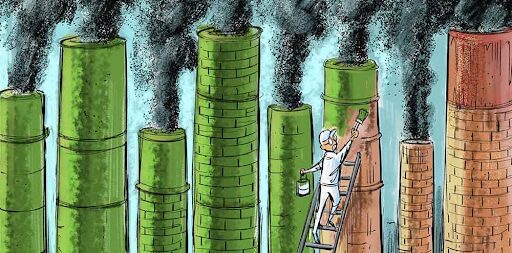
Critically, Trump’s push to drill in Alaska demonstrates a larger fallacy in contemporary politics. Politicians tend to act based upon the paradigm that the environment and the economy operate in separate orbits, which is almost never realistically the case. With countries implementing more and more green policies every year, companies are hesitant to invest in projects that would undeniably damage the environment, with Alaskan drilling being no exception.
The Façade of Alaskan Drilling
Take the Arctic National Wildlife Refuge (ANWR). In October, the Trump administration began to reopen the full coastal plain to oil and gas development, framing the project as a long-awaited revenue jackpot for Alaska and a patriotic boost to “energy dominance.” Fortunately, markets have a funny way of exposing political fantasies: according to Reuters, when the federal government held its most recent lease sale for the refuge, zero oil companies placed bids due to environmental concerns of drilling in a wildlife sanctuary. Indeed, The Department of the Interior writes that the previous sale in 2021 raised only $14.4 million, most of which came not from industry, but from state-owned development corporations after major parties like Chevron, BP, and Exxon opted out.
The Old News that is Fossil Fuels
Of course, the trend isn’t limited to the ANWR. Around the world, fossil-fuel investments are losing their shine. The International Energy Agency warns that oil and gas assets risk becoming “stranded” as nations accelerate to net-zero transitions and encourage enterprises to switch their business models to be more environmentally friendly. Companies may build expensive drilling projects today, only to discover tomorrow that the market has decided to move on.
Even when Arctic drilling does happen, the economics rarely match with the political promise of economic benefit. Alaska Beacon corroborates that Alaska’s own Department of Revenue projected that ConocoPhillips’ Willow project pushed by the Biden administration in 2023 would actually cost the state treasury more than it would generate in the first years of operation, using data from previous Alaskan drilling. Indeed, the projection concluded the project would produce a cumulative loss of over one billion before ever turning a profit.
Next Steps in a Progressive World
The climate-economy relationship isn’t a tug-of-war, but rather, a three-legged race. If one side stumbles, the entire system faceplants. Trump’s drilling plan exposes, with modern policy-making, how the “pick one” ideology with the environment and economy is swiftly losing sparkle. Companies are less inclined to invest in fossil fuel extraction when the following has become clear: every climate-worsened disaster, from floods to wildfires, and every supply-chain disruption driven by rising heat and agricultural decline, supports the same argument: environmental instability is economic instability.
If our government truly cares about our economy, the smarter course of action isn’t doubling down on yesterday’s technology. Rather, acknowledging that the economy and the environment share a bloodstream rather than a border will allow us to pursue innovative solutions that match that framework, paving the way to save our planet in our lifetime while simultaneously saving the money in our pockets.
The Zeitgeist aims to publish ideas worth discussing. The views presented are solely those of the writer and do not necessarily reflect the views of the editorial board.