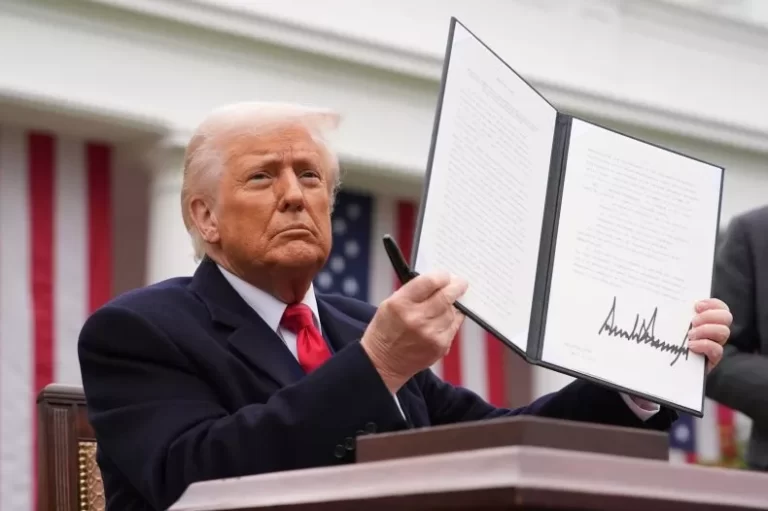
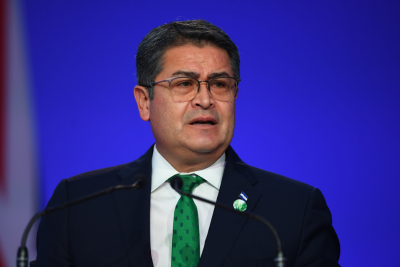
On Dec. 1, President Trump pardoned the ex-President of Honduras, Juan Orlando Hernandez, claiming that he’d been falsely set up by the Biden administration on drug trafficking charges as a patsy, of sorts, as the previous administration sought to assign blame for the shipments of illegal drugs that are often smuggled through Honduras for sale in the United States. When pressed on the matter, Trump reaffirmed his justification for the pardon, saying that “if somebody sells drugs in that country, that doesn’t mean you arrest the president and put him in jail for the rest of his life.”
… and that’s sound enough.
However, this rationale completely falls apart with an objective consideration of the facts. (I don’t particularly subscribe to the left and right post-truth movements. Facts are definite and do convey meaning.) For example, prosecutors under Biden presented substantial corroborated evidence that Hernandez was not, in fact, the unfortunate victim of “political prosecution,” as he alleged, but was instrumental in organizing the shipment of over 400 tons of cocaine, fentanyl, and other illegal drugs into the United States. He used the profits from this venture, then, to fund his political campaigns and protect his associates, such as El Chapo, who kept the scheme running. (The fact that Biden was a Democrat, and Hernandez was member to a growing right-wing movement in Latin America is true, and Trump has made note of such, but that has no bearing on the nature of Hernandez’s crimes and the validity to prosecute them under any administration.)
Yet, Trump still issued the pardon.
However, just three days later, on Dec. 4, the U.S. military launched another strike on a boat they say was running drugs from Venezuela. This act was part of Operation Southern Spear, the formal name given to the military wing of Trump’s policies, which seek to stem the flow of Latin American drugs into the United States. Trump too has put particular emphasis on the need to destroy the drug trade in this country, which disproportionately affected lower income communities, and red-states, and has alleged that Venezuelan President Nicholas Maduro is the mastermind of the main trafficking operation — the “Cartel de los Soles.” (In reality, the “Cartel of the Suns” isn’t a true cartel, but more of a loose, de-centralized network of corrupt military officials who have varying levels of awareness of one another. The term was coined by Venezuelan journalists to poke fun at corrupt generals, whose ranks are denoted by suns in much the same way American generals are ranked in stars… “Cartel” serves as a useful rhetorical device, however.)
So, why does Trump care about Venezuelan-backed drug trafficking, but is willing to forgive or ignore those crimes committed by Hernandez? By my analysis, Trump is doing some heavy-handed politicking at the expense of his message.
Venezuela, as many commentators have pointed out, has a neglected oil industry that many American companies, many of which benefit from right-wing interventionist policy, are eager to revive. In destroying these boats (which may be smuggling drugs) along with, today, seizing a tanker belonging to a Venezuelan state-owned oil company, Trump is hoping to squeeze Maduro into letting the U.S. exercise greater control over the country’s affairs. He hopes to gain from this access to the oil fields and destroy the routes smugglers are using to traffic drugs.
The strategic issue in doing this is that oil demand across the world is relatively stagnant and is expected to decline by the late 2030s. (That said, Trump is looking to reinvest in American fossil fuels.) And, Venezuela’s industry itself will cost billions of dollars to renovate, not to mention the tenuous political situation, which puts some investors on edge. So, it’s ultimately unclear whether there is much material gain from military intervention in Venezuela, apart from maybe stemming some of the drug trade, which is Trump’s stated policy. (It’s also been noted that Trump has previously criticized Maduro for enabling the flow of migrants from Venezuela to the United States).
Whatever his deeper motivation is, Trump is certainly looking to get something out of Maduro… maybe him out of office.
These actions, though, have likely been committed extra-judicially. Evidence has been presented that shows that the U.S., in these strikes off the Venezuelan coast and in the Pacific, has killed at least one innocent Colombian fisherman. U.S. forces have also killed survivors of first-strike-runs in immediate follow-up attacks, which is legally dubious given the circumstances. (And, this isn’t even to dig into the moral conundrum!)
With regard to Trump’s pardoning of the ex-Honduran President, it appears confusing and entirely antithetical to his tough-on-crime rhetoric. But, as Trump has asserted himself, he doesn’t care about nor believe the noise, and that — in his own truth, to use his relative language — Hernandez is innocent. (Whether his belief is genuine or just convenient is unclear, and it’s hard to say for such an inconsistent politician.) But, it’s a position which was influenced, in part, by a letter sent by Hernandez via Republican handler Roger Stone in which he pleaded with the President’s own rhetoric, that “like you, I was recklessly attacked by radical leftist forces who could not tolerate change, who conspired with drug traffickers and resorted to false accusations, lawfare, and selective justice to destroy what we had achieved and clear the path for the Honduran radical left’s return to power.”
What’s most apparent to me is that while, yes, Hernandez is pleading for release, he also shares a strong alignment with Trump’s political tastes. They are both right-wingers after all, and Hernandez is a member of the growing movement of right-wing Latin American politicians, which includes Javier Milei of Argentina and Nayib Bukele of El Salvador. For Trump, having one of your political allies in prison — an American prison, no less — is bad for the spread of right-wing politics and the politicians who will keep their country in America’s sphere of influence. Additionally, the pardon also invalidates the Biden administration’s efforts, with the addition of some Trump-rhetoric re-characterizing them as illegitimate and corrupt. That’s a win for Trump.
So, anyway, what’s the rationale for the difference between America’s handling of the Venezuelan and Honduran situations?
I’d say that both are being conducted with the assumption that policy goals and politicking goals can be achieved together… and maybe they can. But, under this administration, it seems unlikely that any edge in the political-game will be sacrificed for the sake of returning measurable policy benefits to the American people. Even in the Republican-voting counties which need it most.
The Zeitgeist aims to publish ideas worth discussing. The views presented are solely those of the writer and do not necessarily reflect the views of the editorial board.