In 2024, the Metropolitan Transportation Authority (MTA) lost nearly $1 billion to fare evasion — the act of using public transportation without paying the required fare — across New York City, an analysis by the Citizens Budget Commission determined. Of that total, the subway accounted for $350 million in unpaid fares. For every minute of 2024, 330 subway fares were evaded. So for a city attempting to shake off a reputation for higher crime rates and fiscal mismanagement, New York’s tolerance towards this form of lawlessness undermines that effort and continues to drain the already financially-strained MTA.
The primary obstacle toward reducing fare evasion directly deals with the fine process set by the MTA. For first-time offenders within a four-year period, law enforcement officers are explicitly ordered not to issue a fine. Instead, only a warning is given. Maintaining a policy that effectively institutionalizes no-fine warnings for the first offense creates an incentive for riders to skip out on paying the fare up until the time they are caught. In other civil and criminal offenses, although warnings might be issued by law enforcement depending on the circumstances, there is typically a tangible consequence for first-time offenders. But when it comes to fare evasion in New York, no such deterrent exists unless the offender has a prior violation. And when other riders see fare evasion go unpunished, it sends a message that lawbreaking is routine for the city, contributing to a broader perception of disorder which is felt all across the metropolitan area. Pursuing a zero-tolerance policy would instill accountability and send a clear message that fare evasion, no matter how minor, carries real penalties.
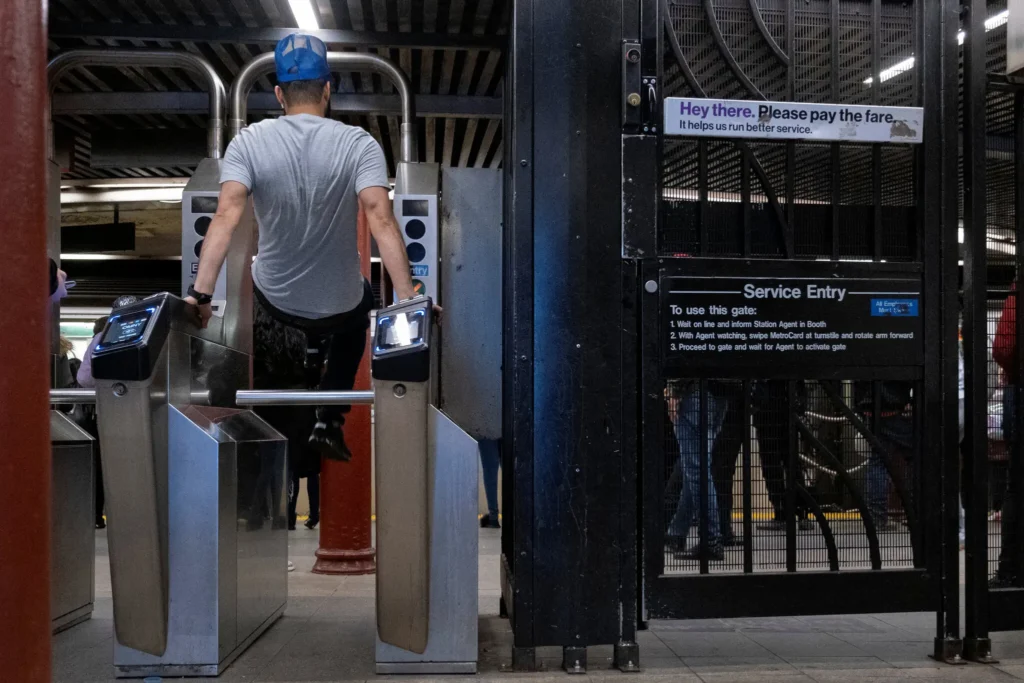
The current model of the turnstile, although having advanced in its technological form from accepting coins to tokens to the MetroCard and now to OMNY contactless payment, currently has the same familiar waist-high metal barrier with rotating arms as it did when it was first introduced in the 1950s. Its outdated equipment performs a lackluster job at ensuring everyone pays their fare. From being jumped over and ducked under to back-cocked (pulling back the arm slightly to squeeze through), the turnstiles are costing the government millions in lost revenue. A clear solution to this issue is to install full-height fare gates in stations with the highest records of fare evasion. These gates ensure that riders can only enter through the proper, designated way. In 2023, The Washington Metropolitan Area Transit Authority (WMATA) reported a greater than 70 percent reduction in fare evasion after installing higher fare gates. In California, Bay Area Rapid Transit (BART) installed 72-inch-tall fare gates, and according to the agency, “the number of riders who say they’ve witnessed someone fare evading on their trip has dropped by more than 50% in just the last year.”
These gates also expand access to riders in wheelchairs or with strollers or bikes, consequently reducing their reliance on the emergency exit door — another method used by fare evaders to get to the other side of the turnstiles. And while piggybacking (following directly behind a paying rider before the gates close) is still an option for those looking to get a free ride, it still requires at least one person to pay the fare. As a result, it generally doesn’t lead to fare evasion on the same scale as turnstiles do, as evidenced by WMATA and BART’s initiatives.
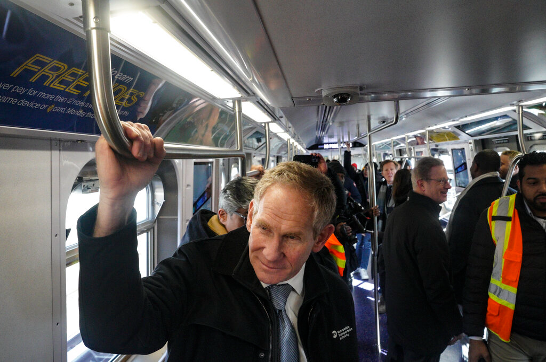
The MTA’s 2025-2029 Capital Plan does allocate funding towards implementing modern fare gates at more than 150 subway stations over the next five years. As part of this plan, in April, Governor Hochul and the MTA announced a pilot program that would see four different modern fare gates placed in 20 stations. The premise was for the four vendors — Conduent, Cubic, Scheidt & Bachmann, and STraffic — to have each of their gates installed at five separate stations in the fall, and whichever design is the most effective at combating fare evasion will ultimately be awarded the contract to complete the Capital Plan’s larger proposal. However, it is deep into the fall season currently and, since that April announcement, there has been no further news or MTA updates and no new gates have been installed. Additionally, why would the MTA host a drawn-out competition when it can leverage the latecomer’s advantage by studying other cities to determine which fare gate models have proven most effective? With each passing day, week, and month with no physical progress, the MTA will only continue to lose out on hundreds of millions of dollars desperately needed to maintain public transit throughout the state.
For those who justify not paying the fare because of the affordability crisis plaguing New York City and the broader U.S., the Fair Fares program exists specifically for that reason. Individuals earning up to 145 percent of the federal poverty level and aged between 18 and 64 years old, regardless of immigration status, qualify for 50 percent discounted rides. This means that much of today’s evasion cannot be excused on economic grounds, and ultimately results in fare hikes to make up for lost revenue that punish those who follow the rules. The 2024 MTA Blue-Ribbon Report said “every dollar lost to evasion … increases the need for alternative revenue sources, including through larger fare and toll hikes.” The upcoming 2026 increase in subway and bus fares from $2.90 to $3.00 illustrates this effect in practice.
Without immediate action on installing modern fare gates and altering the enforcement policy, New York’s transit system will keep losing significant sums of money while law-abiding riders pay the price.
The Zeitgeist aims to publish ideas worth discussing. The views presented are solely those of the writer and do not necessarily reflect the views of the editorial board.