
Last month, over 50 federal agents descended on Canal Street in an immigration raid targeting the area’s street vendors. It was the latest in a months-long escalation of militant ICE presence in New York City, resembling actions seen across the country from L.A. to Chicago. Attorney General Letitia James responded almost immediately with an announcement: New Yorkers can now submit photo, video, and written documentation of ICE activity to her office through an online portal. A top state official encouraging public citizens to call out federal agents’ misconduct is hugely symbolic, but that may be all this portal turns out to be.
James’ ICE reporting form is well-suited to our current moment when documenting interactions with uniformed agents has become the norm. Americans have spent years seeing recordings of police brutality and protestors being forcefully handled by law enforcement go viral. Many have realized that, as bystanders, their strength lies in their ability to record and distribute misuses of power.
We’ve seen this ethic applied to recent ICE mobilizations, as videos documenting arrests and conditions inside detention centers repeatedly garner millions of views across social and news media. Notably, a video released this month shows DHS agents crashing their vehicle into a civilian’s car and forcefully arresting the car’s driver, a U.S. citizen.
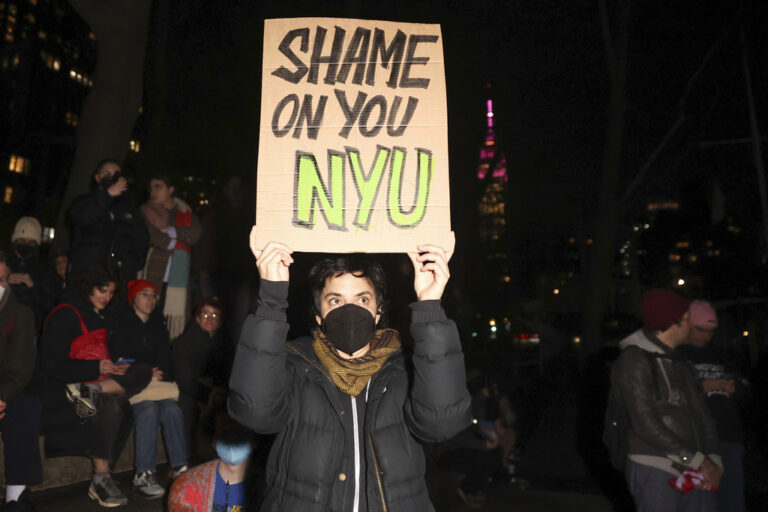
Upstanders, or those who step up to document inequitable treatment by law enforcement instead of being passive observers, have taken on an even greater role in response to ICE mobilization. Citizens are banding together in group chats on Facebook and other platforms to share updates on ICE’s whereabouts in their communities; some activists are even patrolling the streets to monitor for ICE officers in real-time. This citizen-led monitoring and documenting of ICE serves to call attention to agents’ brutality, show solidarity with targeted communities, and give citizens who oppose the raids a way to take direct action against ICE.
In establishing New York’s reporting portal, James recognized both the power of civilian upstanders and New Yorkers’ desire to stand up for their neighbors. Giving weight to the value of upstanders’ documentation sends a powerful message: public citizens are now a more trustworthy oversight body than the courts or federal government when it comes to monitoring ICE’s conduct.
But will this portal actually help challenge ICE’s discriminatory targeting and harassment of New Yorkers? James’ announcement doesn’t specify how the reports will be used, but the documentation could conceivably be submitted as evidence if New York brings a lawsuit challenging ICE’s conduct in arrests. James’ office has already filed an amicus brief opposing ICE’s practice of arresting immigrants attending routine court hearings and check-ins, and joined other states in a brief opposing ICE’s policy of detaining immigrants before hearings.
Besides these actions, which continue James’ long history of challenging Trump, there is considerable political will in New York to stand up to ICE. Multiple city and state political leaders have been arrested while protesting detention conditions at 26 Federal Plaza, an immigration holding facility in Manhattan.
Still, if New York were to pursue legal action challenging ICE agents’ misconduct during arrests, James’ office would be fighting an uphill battle in the courts, even when armed with video evidence. The Supreme Court has granted the federal administration broad authority to carry out its immigration agenda. In September, the Court greenlit ICE’s practice of targeting immigrants in Los Angeles based on arbitrary characteristics including race, language, and location.
Although James’ reporting form may not help bring legal justice to those who have experienced ICE’s misconduct, it still resembles a bold step in standing up to the federal administration’s militant approach to immigration enforcement. New York’s next step must be to combine this message with bold legislation like the New York for All act and bolster protections for immigrants against ICE’s predatory tactics.
The Zeitgeist aims to publish ideas worth discussing. The views presented are solely those of the writer and do not necessarily reflect the views of the editorial board.