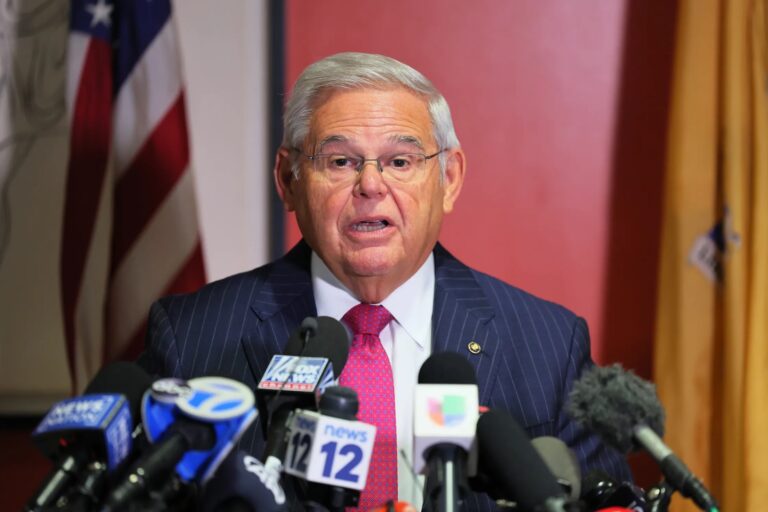

In the 2024 Presidential election, Trump took New Jersey by surprise: the previously reliably blue state suddenly saw tight margins, with the Democratic candidate barely eking out a single-digit margin of victory. This blue stronghold of a state nearly voted for one of the most extreme and ubiquitous Republicans in United States history.
Fear from the left and a sense of boosted confidence on the right were the backdrop for this past week’s gubernatorial election in New Jersey, one year after Trump’s gains. Endorsed by Trump, Republican candidate Jack Ciattarelli aligned himself with the President, yet attempted to keep a slim level of estrangement to appease a base of Trump-skeptical republicans. While claiming the President’s second term has proven more successful so far than his first, Ciattarelli has publicly condemned the January 6th riots and discredited claims of Trump linking Tylenol use and autism. Despite Trump’s apparent popularity, Mikie Sherrill, the Democratic candidate, harped on Trump’s disdain for her. In fact, Sherrill campaigned on it, using it to her advantage. The outcome — Sherrill’s anti-Trump campaign surpassed Ciattarelli’s by nearly 14 points.
What might this tell us about support for Republican candidates in the era of Trump, a year into his term?
Ciattarelli took a few steps to approach his relationship with Trump, as, according to Time Magazine, his current challenge is at least to prove to skeptical Republicans and independents “a pragmatic relationship rather than a political surrender.” Mike Dumain at the New York Times writes, “And so what he’s trying to do is make sure people know that he agrees with Trump on certain things, but has a different style.” Next to Ciaterelli, Sherrill ran a robust campaign, with a thorough, unwavering throughline. POLITICO, writing on minority, working-class Trump voters, says, “Sherrill helped return many of those voters to the fold through what she said was a laser focus on issues of affordability.”
The demographic shifts that buoyed Trump’s New Jersey support faltered in last week’s election results. Support wavered primarily among Latino voters, who had previously had an unexpectedly large swing towards Trump in the presidential election. However, 68 percent of Latino voters supported Sherrill in the gubernatorial election, disrupting sizeable gains by Trump among New Jersey’s primarily Latino towns.
Melissa Morales, the president of a Latino voter mobilization organization, explains, “Latino voters are very pragmatic. They’re going to vote for whoever is actually addressing their priorities.” Sherrill’s success among Latino voters does not come as a surprise, as Morales’ organization found that Latino voters expressed frustration with the Trump administration for focusing on immigration over issues of affordability. Sherrill, through her clearly outlined Affordability Agenda, prioritizes precisely the issue that confronts many Latino voters in New Jersey with frustration towards the republican administration at the moment.
The shifting tastes of voters convey that the stance of “being in the middle” may be a weak approach in an era of staunch politics. Any level of amicability and political alignment with the sitting president may be enough to politically poison a candidate’s campaign in the public’s view, regardless of attempts to disprove this. Trump often keeps confidants very close and all others at a clear distance. Ciattarelli attempted to sit somewhere in between with his relationship to the president to win the more moderate republicans and independents, but with issues such as affordability at the top of the ballot and increasingly agitated voters, this tactic proved futile.
With the major defeat of the Republican candidate, who, although mildly, attempted to soften “Trumpism,” a new question arises: in an age of a president who promotes cut-throat, all-or-nothing politics and relationships, can politicians find support by appeasing both sides? Or is any degree of an amicable relationship with the president synonymous with a political surrender?
The Zeitgeist aims to publish ideas worth discussing. The views presented are solely those of the writer and do not necessarily reflect the views of the editorial board.