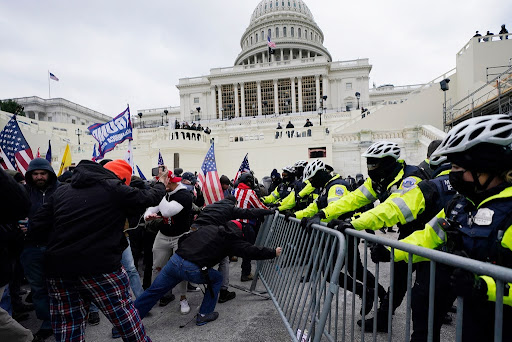
The presidential pardon power is as old as the presidency itself. However, Trump’s approach to this privilege stands as a departure from precedent. Earlier this week, President Trump pardoned a long line of political allies and former administration officials who stood behind his attempts to overturn the 2020 election results — efforts that resulted in the violent assault on the Capitol by a mob of supporters on Jan. 6, 2021. Although many of those on the list receiving “full, complete and unconditional pardon[s]” still face ongoing or state prosecutions that federal clemency cannot touch, the pardons remain largely symbolic of the President’s efforts to rewrite history.
Article II, Section 2 of the Constitution defines the presidential pardon ability as the power to “grant Reprieves and Pardons for Offences against the United States, except in Cases of Impeachment.” This authority includes several forms of relief that may be granted after alleged involvement in a federal crime. Its origins are traced back to rule by the English Crown, which possessed the legal tradition “prerogative of mercy.”
Our earliest presidents have long exercised this constitutional authority; George Washington used it to issue amnesty to those who participated in Pennsylvania’s Whiskey Rebellion, while Thomas Jefferson granted amnesty to those convicted under the Alien and Sedition Acts that restricted immigrants and criticism of the government.
Many more well-known exercises of executive clemency have been done by modern presidents. For example, President Ford famously pardoned President Nixon after the Watergate scandal, in which Nixon and his aides engaged in illegal activities during his 1972 reelection campaign and sought to cover up the evidence. This controversial decision plummeted Ford’s approval rating, which never recovered and resulted in him losing the 1976 election. Since using the pardon power is so politically costly, presidents often only use this ability at the end of their terms.
Trump, however, is breaking that pattern. Not only did the president begin his 2024 campaign with a pledge to absolve those involved in the January 6 insurrection, but he began keeping his promise on his first day back in office, when he fully pardoned 1,500 rioters and commuted the sentences of extremist group leaders who initiated the attack. With the most recent pardons of Rudy Giuliani, Sidney Powell, and more, Trump continues to uphold his vow. There is an apparent absence of hesitation or shame about these decisions, given that he has made them early on in his term and continues to pardon more insurrectionists.
It is one thing for a president to pardon those whom they favor out of personal bias. Past modern presidents, like Bill Clinton and Joe Biden, have admittedly done this; Clinton pardoned his half-brother, who was convicted of conspiring to distribute cocaine in Arkansas, while Biden pardoned his son, who faced a multi-year sentence for tax charges and falsely denying drug use on a firearm application. The act of politically shielding friends and family from accountability is ethically indefensible but has far fewer systemic implications for our government’s functioning.
It is an entirely different situation when a president invokes their power to protect those who undermine our country’s democracy for personal reasons. Not only are morals at stake, but the integrity of our governmental institutions is in jeopardy.
Through his pardons, Trump is sending the message to his followers that anti-democratic conduct and acts of sedition are acceptable. What implications will this have for the 2026 midterm elections, or even the 2028 presidential election?
The broad implications of this approach to pardon power extend beyond any individual case. When a sitting president openly defends those who have subverted the democratic process, it rewrites narratives to excuse and justify increasingly dangerous violations of accountable governance, which sets a new, concerning precedent for future officeholders. When they see that such illegal actions can be excused when politically convenient, extremists are emboldened and partisan divides widen. The health of our democracy is dependent not simply on elections but also on the standard that our government and its citizens cannot place loyalty to a leader above the law.
The Zeitgeist aims to publish ideas worth discussing. The views presented are solely those of the writer and do not necessarily reflect the views of the editorial board.