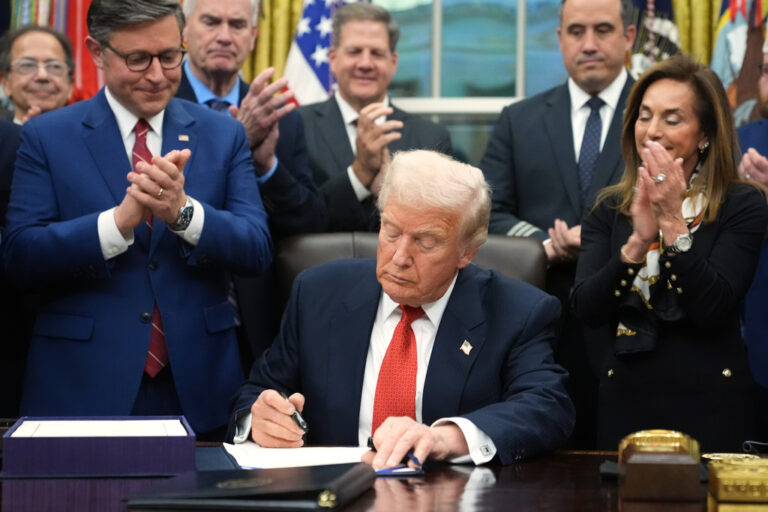
“The Democrats are far more likely to win the Midterms, and the next Presidential Election, if we don’t do the Termination of the Filibuster,” wrote President Trump on Truth Social earlier this month. He continues: “FOR THREE YEARS, NOTHING WILL BE PASSED, AND REPUBLICANS WILL BE BLAMED. Elections, including the Midterms, will be rightfully brutal. If we do terminate the Filibuster, we will get EVERYTHING approved, like no Congress in History.”
Trump is mostly correct: Democrats are favored in the coming elections, major legislation is unlikely to be passed for the remainder of his term, and ending the legislative filibuster would ease passage of certain bills. The implication, however, that Republicans will miraculously find electoral success by accomplishing their agenda, is deeply flawed.
The Republican Party’s platform is materially at odds with the vast majority of Americans’ interests. Passage of it would yield a Democratic landslide — not a Republican victory. For Trump, legislative success means cutting taxes for the wealthy, mass layoffs of federal employees, slashing essential services and welfare, tariffs on our trading partners, and blocking critical infrastructure projects — and the list goes on. All of these policies would not only harm individuals directly but also destroy our economy by raising prices, causing unemployment, and weakening America’s competitive edge on the world stage.
Simply put, the Republican agenda is designed to line the pockets of the rich at the expense of our nation’s overall health and success. It is anti-American in the purest sense.
While most Americans may have supported Trump, they did not do so based on careful analysis of his agenda, but instead based on dissatisfaction with the status quo under the Biden administration. If the country feels the tangible effects of Trumpism, the populist rhetoric of MAGA will not be enough to save Republican incumbents. As President Eisenhower wisely wrote: “Should any political party attempt to abolish social security, unemployment insurance, and eliminate labor laws and farm programs, you would not hear of that party again in our political history.”
Earlier this month, Republican senators ignored Trump’s demand to scrap the filibuster in fear of what Democrats could accomplish when they return to power. Instead, Republicans should be fearful of what they could accomplish without a filibuster and unworried about Democrats’ potential (or lack thereof). In reality, the Senate Democratic Caucus is deeply divided and will struggle to pass major legislation — even without facing a filibuster.
If Senate Democrats cannot even unanimously recognize the filibuster for what it is — an undemocratic institution that prevents parties from governing, in turn protecting Americans from the consequences of their votes — then why should anyone expect them to unify around a common agenda once they win back the majority?
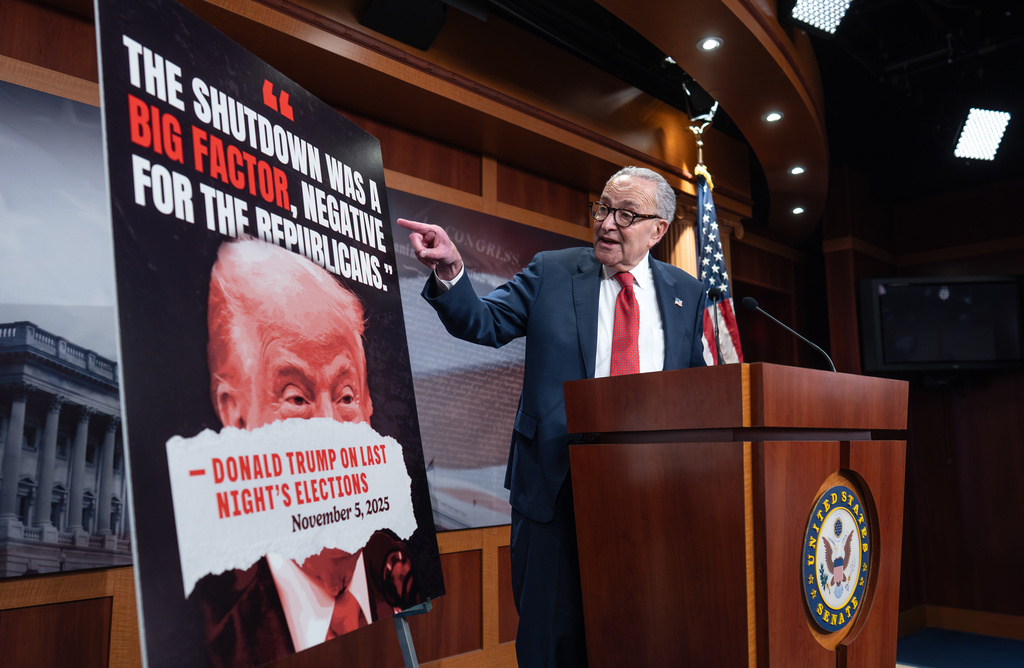
The dysfunction and division of Senate Democrats was on full display this month when eight senators broke party lines to vote for a Republican appropriations bill, reopening the government. That’s eight out of 47 Senate Democrats (17 percent) compared to six out of 214 House Democrats (three percent) for the same bill. The shutdown was achieving its political aims; blame for the shutdown was being placed on Republicans, harming the GOP in approval ratings and elections. If the shutdown had continued, Republican leadership would have been forced to choose between axing the filibuster or making policy concessions — either outcome would have been better than the “deal” brokered by the eight Democratic defectors.
Not only do Senate Democrats break on political questions such as the shutdown and filibuster, there is even less agreement when it comes to public policy. When Democrats last held a majority in the Senate — during the first two years of the Biden administration — several major pieces of legislation were either blocked or watered down due to ideological divides.
In 2021, eight Senate Democrats voted against a bill that would have raised the minimum wage to $15 per hour. Three Democratic senators — Maggie Hassan, Angus King, and Jeanne Shaheen — who voted against the minimum wage increase also voted for the Republican appropriations bill this month. Raising the minimum wage, along with other policies that tangibly benefit Americans, should be at the forefront of Democrats’ policy agenda.
Passing legislation that improves the average voter’s material condition is necessary for Democrats to build a winning political coalition. Maintaining the status quo will do nothing to solve the party’s popularity problems or keep reactionary Republicans out of office. Still, the fact remains that a large group of Senate Democrats oppose the policy proposals that would yield these necessary economic and electoral results.
Ideological disunity is especially acute among Senate Democrats, where 17 out of 47 Democrats (36 percent) have co-sponsored the Medicare for All Act, compared to 107 out of 213 (50 percent) of Democrats in the House of Representatives. Similar to raising the minimum wage, single-payer healthcare must be a major part of the Democratic policy agenda. Even with a Democratic majority and without a filibuster, Senate Democrats would fail to significantly move the policy needle in a progressive direction.
Democrats should end the filibuster when they get the opportunity. But it is not a silver bullet for all of their political problems. Fundamentally, the party has failed to deliver because it is too ideologically divided. And until more progressives get elected to Congress and conservatives get voted out, congressional politics will continue business as usual.
The Zeitgeist aims to publish ideas worth discussing. The views presented are solely those of the writer and do not necessarily reflect the views of the editorial board.