Pardons, these days, seem to be flippantly dished out one after another.
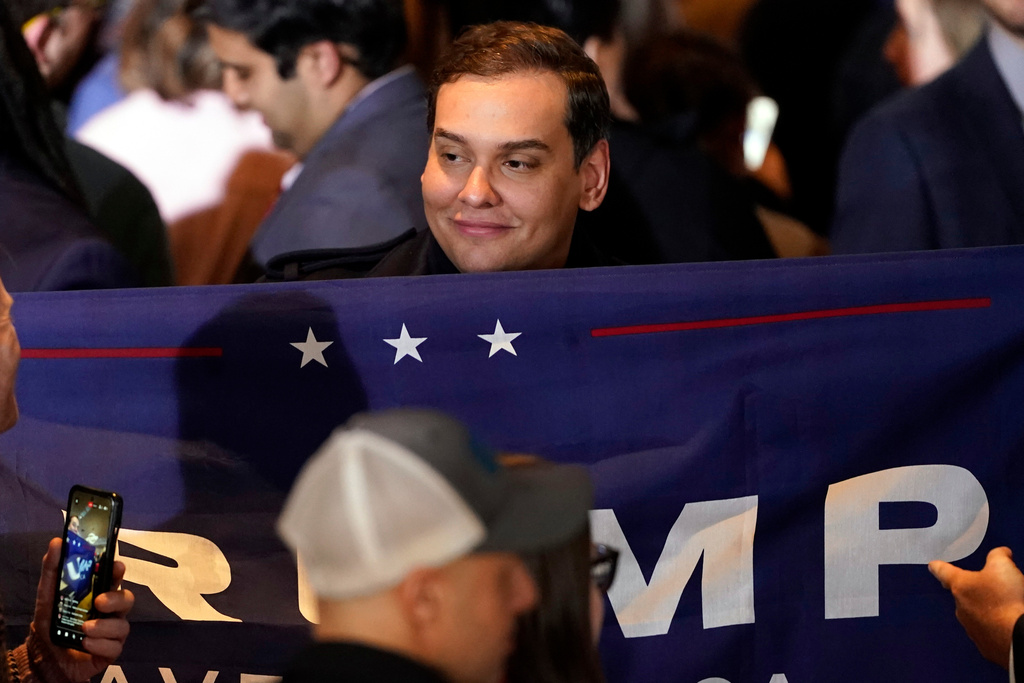
In one week, the news has been abuzz over two of Trump’s uses of clemency. Former Rep. George Santos was commuted on Oct. 17, and former Binance CEO Changpeng Zhao was pardoned on Oct. 23. Santos was sentenced to 87 months of imprisonment and $373,749.97 in restitution on April 25 of this year for wire fraud (The Party Program Scheme) and aggravated identity theft; Zhao faced four years in prison with a $50 million fine on April 30, 2024, for money laundering. Now, they walk scot-free — well, basically. While Santos’ commutation doesn’t wipe his record completely clean, he no longer has to pay the restitution, and he only served three months in prison instead of seven years.
All this means is that whatever justice was served out is now obsolete. The closure some victims had by the sentences has been forcibly ripped out of their hands. No retribution will be made or carried out. This is a warning signal.
But it’s not just a warning signal: it’s a blaring alarm. If the fact that Trump has exercised the pardoning power over 1600 times within his second term alone — a mere few months — isn’t concerning, I don’t know what is.
Historically, we all know that the power to pardon has been endowed to the executive branch via the Constitution in Article II, Section 2, Clause 1. And historically, it has been a function of remedying the defects of the criminal justice system — or the law in general. Now, this is not so much the case. A deviation from the original intent in the allocation of this power is evident.
The releases of Santos and Zhao aren’t just isolated cases. There’s a pattern. Biases in the types of cases presidents take on are inevitable — Obama favored narcotics defendants and Biden marijuana defendants. But there is a common denominator for Trump’s: his MAGA supporters and allies.
Alongside Santos, who was a political ally for Trump as a Republican representative for the predominantly blue state of New York, and Zhao, whose efforts to strike a business deal with World Liberty Financial (the Trump family’s crypto start-up) generated tens of millions for the president, those who were granted clemency had some sort of tie to the Trump Administration. This includes, but isn’t limited to, Todd and Julie Chrisley, former reality stars; former Illinois Gov. Rod Blagojevich, a contestant on Trump’s “Celebrity Apprentice” TV show; Devon Archer, a large critic of Hunter Biden; a Trump-supporting Virginia Sheriff charged with bribery; Ross Ulbricht, as part of a deal for Libertarian voters; anti-abortion protestors; and most notably, Jan. 6 participants. More than 1,500 of the pardons have been allocated to Jan. 6 participants, and that’s excluding the 14 commutations also related to the event.
As much as I have been pointing out Trump’s abuse of the enumerated power, this discussion necessitates the acknowledgment that this specific privilege has been abused on multiple accounts before. The individual act of overusing the pardoning power isn’t unique to Trump. What’s unique is Trump’s specific intent with it — to reward his loyalists. Presidents have been increasingly exploiting the power of the pardon. None of the previous presidents are reprieved from this critique. At the end of his term, Biden faced major backlash for his incessant use of the power — 4,245 grants of clemency isn’t a small number. In fact, that’s the greatest number of clemencies granted by any president. The power to pardon needs to be curbed before future presidents can substantially abuse this power the way Trump has been. Unfortunately, there is little Congress can do to regulate it through legislation.
Still, even with the status quo pointing to the glaring problem of unchecked power, Trump’s perversion still has to be treated with caution. In an NBC article, a staffer at the White House said, “Policy-wise, Trump is one of the few presidents who tried to commit to doing these pardons regularly.” Marc Osler, a law professor at the University of St. Thomas School of Law in Minnesota who is an expert on clemency, referenced in the same article contributes, “Trump appears to be using an informal, closed and opaque process to evaluate petitioners (or those like George Santos who did not even file a petition), while ignoring the thousands of people who followed the rules and submitted a clemency petition through the pardon attorney.”
We’re heading toward a future that is reminiscent of the Jacksonian Era with the spoils system. This observation isn’t new, given Trump’s appointments for the head of bureaucratic institutions, but it is becoming evident with his pardons for his allies, prioritizing loyalty over justice. He’s skirting around the law, using it to punish his political enemies and to release his minions. No longer will the pardon system be seen as a way to counter the imperfections in our legal system, but another tool in the executive branch’s arsenal to bolster its power.
The Zeitgeist aims to publish ideas worth discussing. The views presented are solely those of the writer and do not necessarily reflect the views of the editorial board.