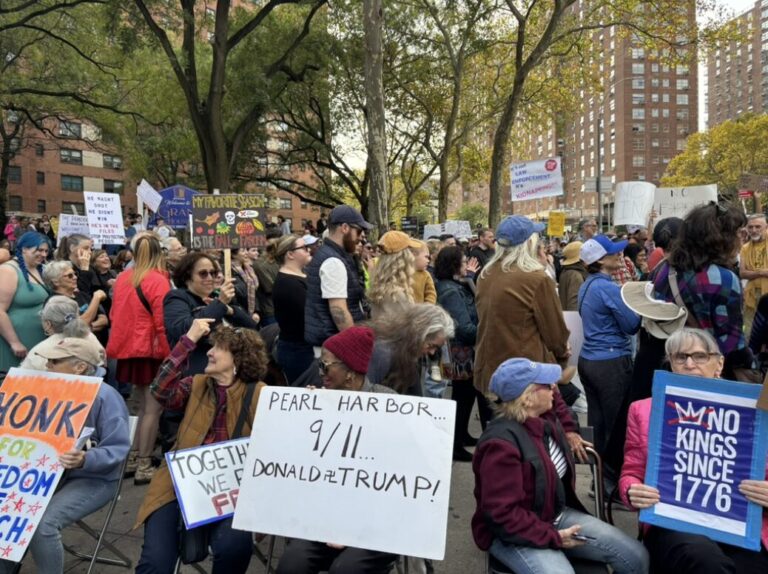
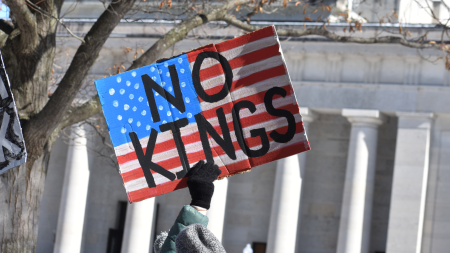
Last Saturday, over seven million people attended the second day of “No Kings” protests around the world. “No Kings” is a growing coalition of social movements that have organized two nationwide protests in the last year against the Trump Administration’s attempts at expanding executive power.
In the past months, Trump has deployed federal troops into several major cities across the country, unilaterally launched attacks on Venezuelan boats in the Caribbean, and hinted at a possible third term in office. These actions, along with what some see as a concerning shift towards authoritarianism by the administration, have sparked significant support for the “No Kings” rallies in retaliation.
Following the protest, Donald Trump posted an inflammatory AI-generated video of himself degrading protesters to his Truth Social account. In the video, he flies a “King Trump” fighter jet over protesters in New York City, dumping brown liquid on the crowd below.
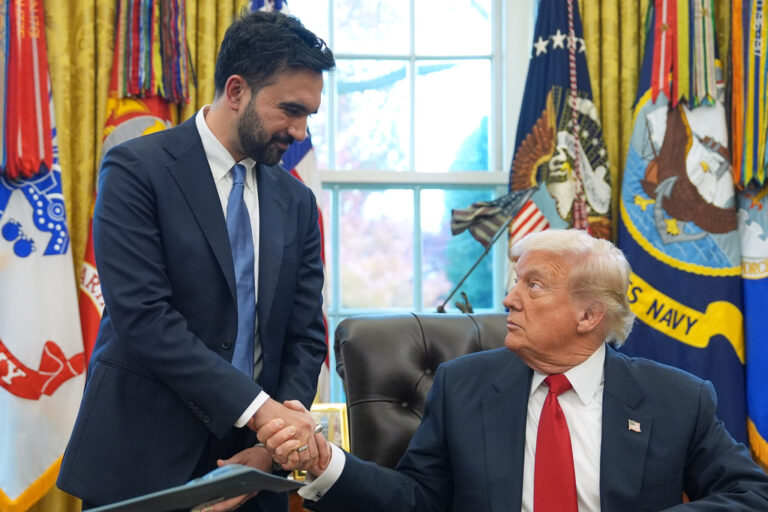
Later that day, he told reporters that, “the demonstrations were very small, very ineffective and the people were whacked out. When you look at those people, those are not representative of the people of our country.”
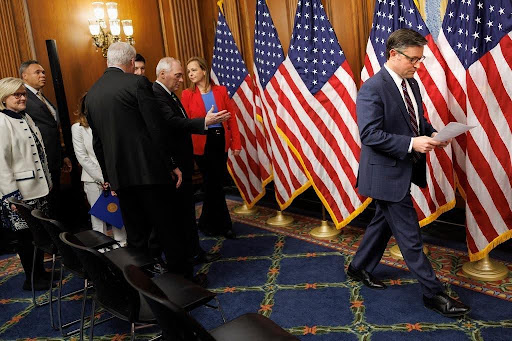
Other heavyweights in the Republican Party have echoed the sentiment. In a recent news conference, Speaker Mike Johnson claimed without foundation that the protests would exacerbate and extend the ongoing government shutdown, and implied that the attendees belonged to far left fringe groups. He described the event as a “hate America rally.”
But what could be more American than protesting kings?
Despite Trump’s dismissive rhetoric, “No Kings” was a resounding success. Estimates show that millions of people turned out to protest in over 2,000 towns and cities in almost 20 different countries. This marked the largest single-day protest in United States history. Second place? The inaugural “No Kings” protest held in June earlier this year. The protests also took on a surprisingly positive tone, with cities like Washington, D.C. which drew about 200,000 protestors, reporting singing and dancing as part of the events; some even dressed up for Halloween.
In the past, demonstrations have hardly received acknowledgment at all from the president, but he and his fellow Republicans have finally begun to pay attention. After the protests, officials in the administration have done their best to minimize the fallout, and have either attacked the premise of “No Kings” or underplayed its success. When asked about the protest at a press briefing, White House spokeswoman Abigail Jackson responded with, “Who cares?”
Although top Republican officials would like to promote the narrative that “No Kings” was a failure, the engagement from the president proves that this, if not an outright success, was at least a step in the right direction. And, despite warnings that the protests would lead to violence and disruption, the protests remained largely peaceful throughout the day.
What can Democrats take away from this? There is an overwhelming amount of discontent with Donald Trump and his policies, enough to motivate millions of people to take to the streets. This is the kind of energy and enthusiasm that the Democratic Party needs to harness. Whether they will be able to or not is yet to be seen, but other campaigns — like that of New York City mayoral candidate Zohran Mamdani — have found ways to effectively use this dissatisfaction to motivate voters in their favor. The party needs to use this energy and momentum to mobilize voters, or risk defeat again in the next midterm election and beyond.
The Zeitgeist aims to publish ideas worth discussing. The views presented are solely those of the writer and do not necessarily reflect the views of the editorial board.