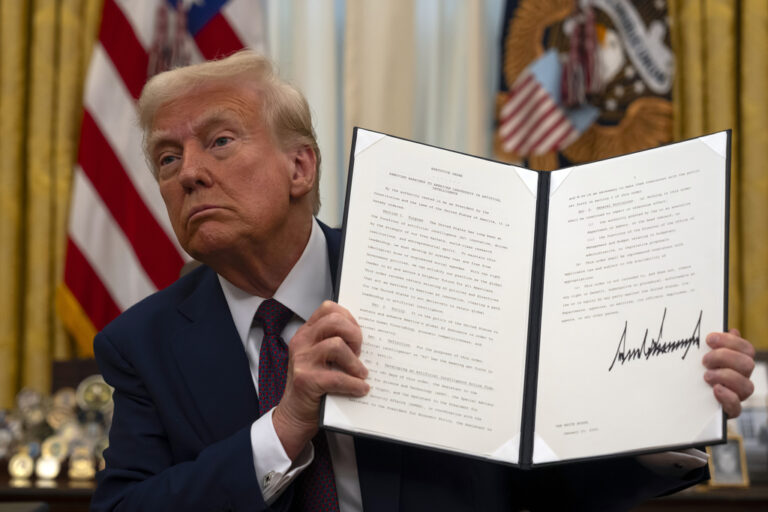
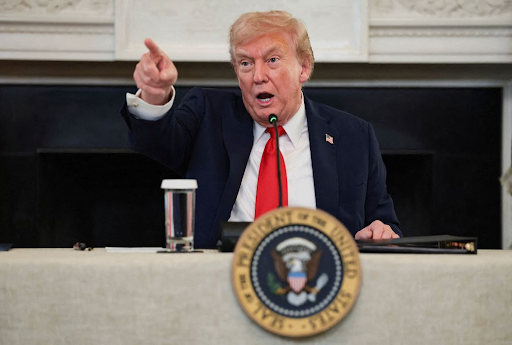
The first day President Trump was in office, he signed the Restoring Freedom of Speech and Ending Federal Censorship executive order. It declared that “government censorship of speech is intolerable in a free society,” and promised that no federal official under his administration would “unconstitutionally abridge the free speech of any American citizen.” Nine months later, that promise rings hollow.
Trump’s administration has waged an all-out campaign not to expand free speech, but to police and punish it. The same president who claimed to be ending censorship has spent his second term deciding whose speech counts as “free.”
After the assassination of right-wing activist Charlie Kirk at a Utah college event, the White House and its allies launched a sweeping crackdown on perceived disrespect toward the slain conservative. The Texas Education Agency opened investigations into hundreds of teachers for social media posts that were deemed “inappropriate” or “disrespectful.” Legal experts have called it a “witch hunt” that shows a stunning disregard for educators’ First Amendment rights.
The administration’s response has extended far beyond Texas. Trump’s communications team pressured a private media company to suspend late-night host Jimmy Kimmel for comments about Kirk’s shooter, threatened to pull licenses from networks that aired content he disliked, and even promised to prosecute “hate speech,” a category of expression fully protected by the First Amendment. The State Department vowed to revoke visas over posts “celebrating” Kirk’s death, and Pentagon officials announced they would “address” federal employees who mocked it. This is not the posture of a government defending free speech. It’s the posture of a government deciding which speech deserves protection and which deserves punishment.
The pattern is unmistakable. The administration has sued The New York Times and other major news outlets for coverage it finds unfavorable, threatened Democratic members of Congress with investigation for criticizing conservatives, and withdrawn federal grants that included language Trump’s allies opposed. His appointees at the Federal Communications Commission have opened investigations into networks that refused to follow his narrative, while barring The Associated Press from the White House press pool because it wouldn’t use Trump’s preferred geographic terminology.
Even the Pentagon, now led by Secretary of Defense Pete Hegseth, has joined the censorship campaign. Under new media rules, reporters covering the Department of Defense must agree not to publish “unauthorized” information — even if it is unclassified — or risk losing their credentials. The administration calls it a step to “protect national security.” Journalists call it what it is: a restriction on the right to report. Once press access has been granted, the government cannot withdraw it arbitrarily. But that is precisely what the Pentagon now threatens to do.
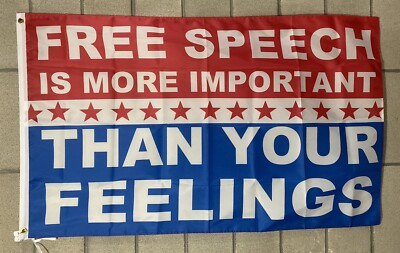
While Trump’s government punishes dissent, conservative citizens are still pushing for a radical expansion of free speech, with lawyers fighting in the Supreme Court to expand protections in ways that serve their ideological agenda. In Chiles v. Salazar, a Colorado counselor argues that the state’s ban on conversion therapy for minors violates her First Amendment rights. Her lawyers claim that because conversion therapy involves only speech, it must be protected as free expression. The same movement that seeks to discipline teachers, journalists, and public employees for their words now argues that therapists have a constitutional right to use speech in the service of conversion therapy.
That contradiction has exposed a growing fault line on the right. For years, free speech served as a unifying rallying cry against “woke” universities and liberal media. But as Trump’s government tightens press access, restricts protests, and prosecutes dissent, that shared language is fracturing. Some conservatives still see free expression as a core constitutional value; others, particularly in the MAGA orbit, now treat it as conditional — a privilege reserved for those who serve the movement. This may not be the breaking point. But it does reveal a structural weakness — a widening gap between the movement’s rhetoric and its governing reality. Free speech was once a weapon against tyranny; under Trump, it has become a mechanism of it.
That weakness is also a political opening Democrats must recognize as a strategic opportunity for the 2026 and 2028 election cycles. This isn’t about abstract principles or campus debates; it’s about exposing how the right’s campaign for free speech has turned inward, policing teachers, journalists, and public servants for ideological noncompliance. The contradiction is visible in everyday life, in firings, bans, and silenced voices in the name of protecting the powerful. The task for Democrats is to make that hypocrisy tangible. If they can draw that contrast, they can reclaim the First Amendment as both constitutional and personal, not just a culture-war slogan, but a democratic promise. Because if freedom of speech no longer belongs to everyone, it belongs to no one — and that truth, made visible, could unite the very coalition the right depends on dividing.
The Zeitgeist aims to publish ideas worth discussing. The views presented are solely those of the writer and do not necessarily reflect the views of the editorial board.