
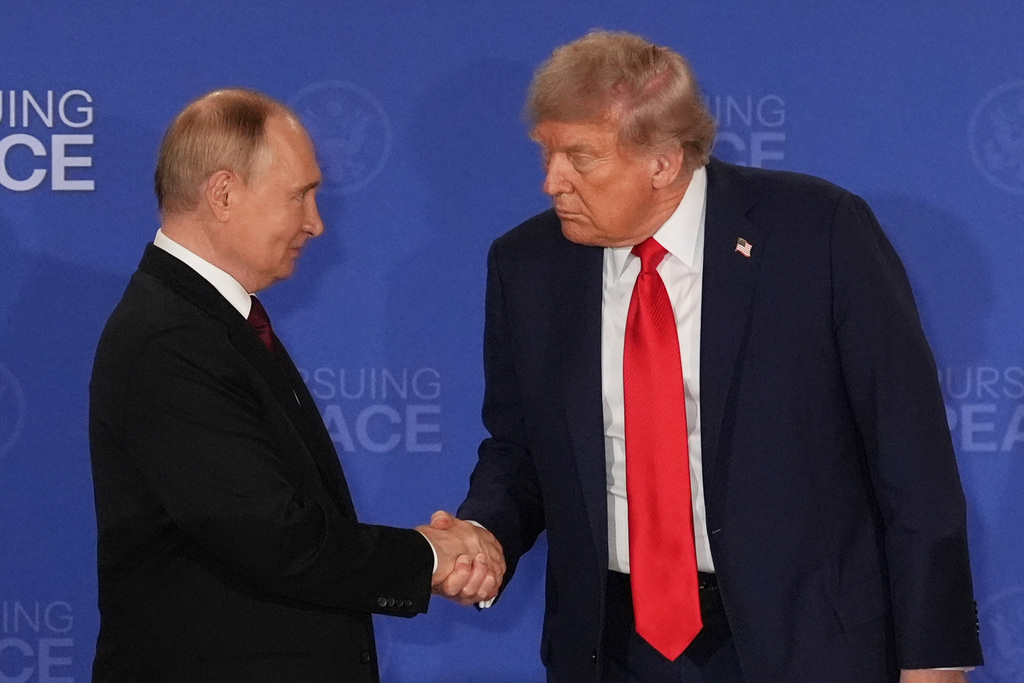
After a two-hour-long phone call with Russian President Vladimir Putin which Ukrainian President Zelensky was not involved in or informed of, Trump has made it clear he will not be selling Ukraine Tomahawk missiles. This technology fundamentally would have the ability to alter the dynamic of the Russian-Ukrainian conflict, as Tomahawk missiles have the capacity to reach Moscow from Ukraine. In expressing the difficulty of operating only with Ukrainian drones, Zelensky stated the Tomohawk missiles would “strengthen Ukraine and force the Russians to sober up a little (and) sit down at the negotiating table.”
Trump previously expressed serious consideration of selling these missiles to Kyiv. He claims he reverted from his original sentiment in selling the weapons due to the necessity for the United States to have the missiles as well. Yet, it is important to note that Trump only began to double down on these previously promising notions after reporting he had floated the possibility during the phone call, and that Putin “didn’t like the idea.” This most recent concession adds to a growing list of Trump-Putin meetings that seem to consistently end in a leveraged position favoring Russia.
More recently, Putin has flown jets over Lithuania and Estonia in a series of airspace violations. Such violations have warranted a defense buildup in impacted countries, including Estonia.
“That fear is largely rooted in Estonia’s history and proximity to Russia, and is shared by other countries in Eastern Europe,” said New York Times journalist Lara Jakes with regard to the worry prompting increased defense funding.
As Putin expands his aggression beyond Ukraine and into NATO territories, the repercussions of Trump’s leniency and concessions are manifold. Not only is Ukraine now approaching its fifth year of war, but Putin is pushing into new territories, in turn unleashing a wealth of geopolitical turmoil and increased agitation internationally.
Through his series of concessions, Trump has gained a reputation in Russia for his unusually soft stance towards Putin’s aggression and a clear pattern of quickly dissipating anger towards Russia. While Trump has wavered in his attitude towards Putin, several leaders internationally have made much more definitive and hardline stances, further putting Trump’s leniency on display.
Russian tabloid Moskovsky Komsomolets acknowledged Trump’s “Groundhog Day” pattern of recession from opposition over the past several months, writing that, “In the couple of weeks before the meeting in Budapest, Trump will be pulled in the opposite direction by telephone calls and visits from Europe. Then Putin will pull him back to our side again.”
Putin’s rise to power is central to his goal of restoring Russia as an imperial power; his invasion of Ukraine is not a means to an end, but the means to a beginning. The more time passes because of extended leniency, the closer Putin is to fulfilling this plan.
Trump has pushed for peace between the two countries, but his words feel increasingly futile. Since peace talks began at the very beginning of this year, the gravity of Trump’s concessions to Russia have become more evident in the face of Putin’s increased aggression.
Trump’s actions indicate the desire to retain some level of amicability between the United States and Russia. Inciting increased violence through amplifying division has never, historically, been successful. But, more importantly, appeasing a fascist aggressor with demonstrated intentions of imperialism has also never proven to develop a path towards peace.
Trump may be able to see Putin and his regime for the lies that they are feeding him and the aggressors that they are, but Trump must outrightly acknowledge that he has been too lenient in his approach. The White House must reverse the course the President has taken over the past year.
If Trump can put his ego aside, acknowledge that he has been taking the wrong approach to his diplomatic relationship with Russia, and, put simply, tell Putin “no”, then the predictably stark future for Ukraine and the surrounding countries may alter course. For now, the future of this war and the expansion of Putin’s aggression appears bleak in the face of nearly uncontested antagonism by the United States.
The Zeitgeist aims to publish ideas worth discussing. The views presented are solely those of the writer and do not necessarily reflect the views of the editorial board.